Appearance defects in stator and rotor cores are never superficial issues. Burrs, rust spots, loose stacking, and mechanical scratches each correspond to a specific degradation path affecting performance. The core task of quality inspection is to infer internal performance risks from visual indicators and intercept potential failure chains before delivery. RYSCM integrates this defect-to-performance mapping as the foundation of its quality control logic across the entire supply chain—from raw material intake to finished product shipment.
## Burrs and Rust Spots: Hidden Damage to Interlaminar Insulation
When burr height exceeds 0.03mm, micro-gaps form between laminations during stacking, increasing local magnetic reluctance and raising iron loss values. If silicon steel sheet iron loss rises more than 8% above the baseline of 1.5 W/kg, measurable efficiency losses will occur in the motor. Dislodged metal debris can also migrate into the air gap during operational vibration, causing insulation wear on windings.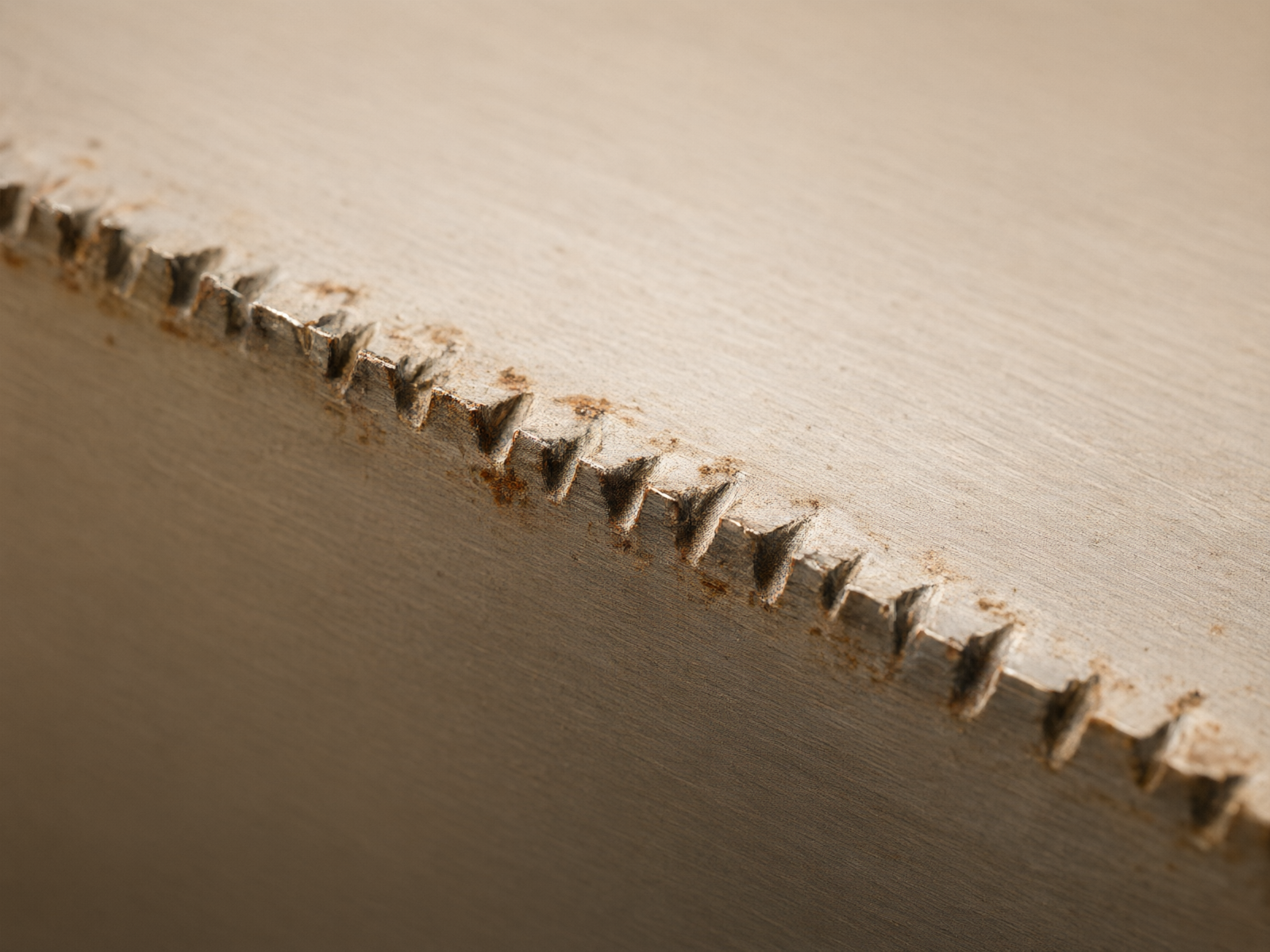 Rust corrosion follows a more direct degradation path. Oxide layers reduce interlaminar insulation resistance and increase eddy current losses. Iron cores exposed to salt spray for over 48 hours exhibit a 1-2 percentage point drop in stacking factor, exceeding the tolerance limit for precision motors requiring ≥98%.
## Loose Stacking: A Direct Cause of Magnetic Circuit Degradation
Insufficient clamping force, die wear, or fluctuations in silicon steel sheet thickness tolerances can all lead to a low stacking factor. Loose stacking reduces the effective magnetic cross-sectional area, causing local flux density concentration and increasing the risk of core saturation. This manifests during operation as abnormal temperature rise and increased noise.
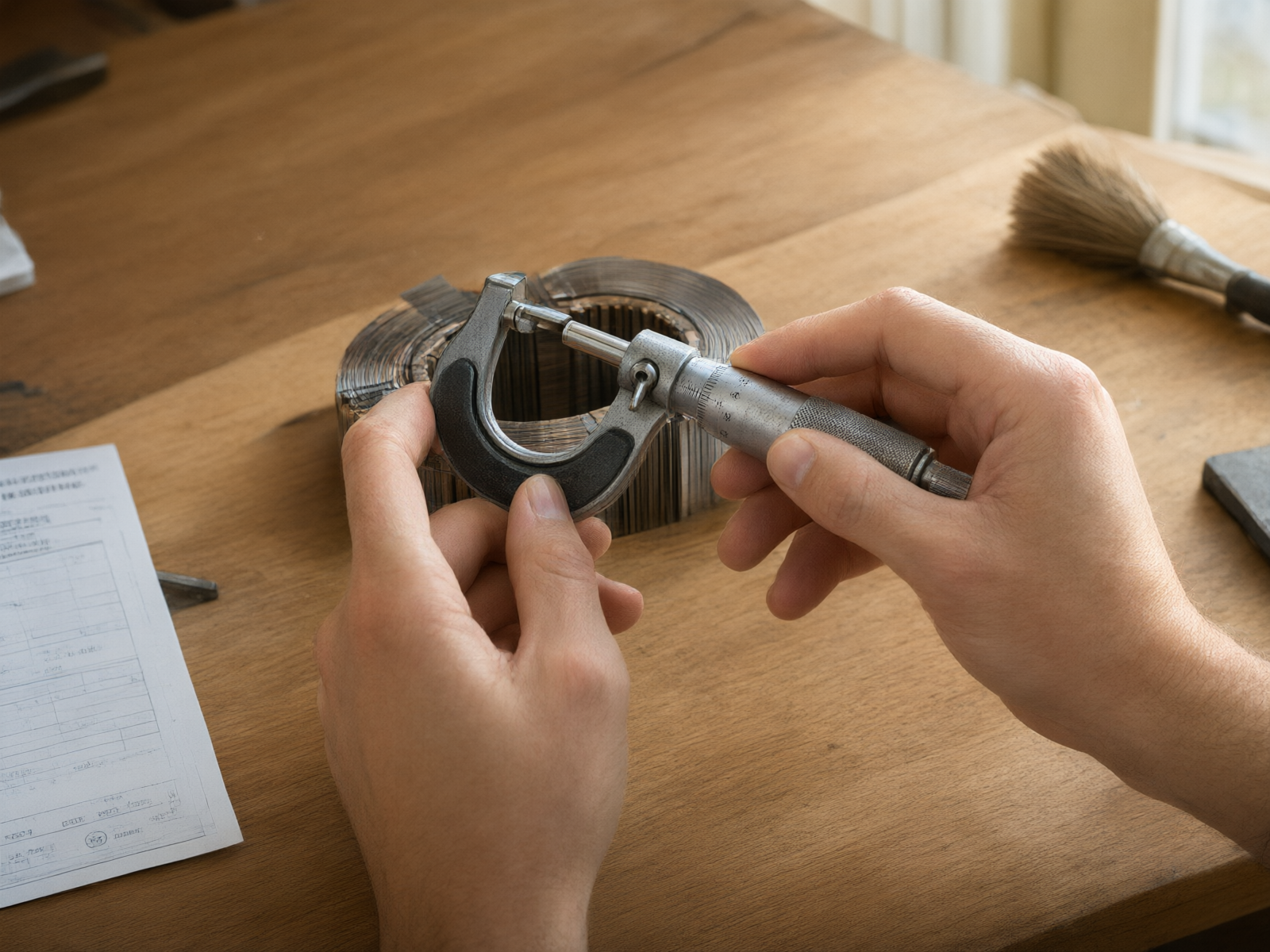
For iron cores with an outer diameter between Φ50 and 500mm, stacking uniformity can be assessed using micrometer multi-point measurements combined with weight-based calculations. The former identifies localized loose areas, while the latter evaluates overall condition through weight deviation. Using both methods together enables inspection without disassembly.
 ## Mechanical Damage: Stress Concentration and Magnetic Performance Degradation
Surface defects such as scratches and dents also compromise core performance. When scratch depth exceeds 10% of the silicon steel sheet thickness, stress concentrates at the bottom of the scratch. During subsequent stamping and stacking, this area may propagate into micro-cracks, leading to localized lamination failure. Dents directly reduce the effective cross-sectional area; stress concentration at their edges further accelerates magnetic performance degradation in the silicon steel sheets.
## Establishing and Executing Quality Inspection Standards
Appearance inspection must go beyond vague assessments like "no visible abnormalities." Rayang Technology has implemented a defect classification control system for stator and rotor core inspections: different criteria and handling procedures are defined based on defect type, size, and location. Parameters such as burr height, rust spot area, and lamination coefficient deviation have clear tolerance limits; exceeding these triggers rework or scrap. This system transforms appearance inspection from experience-based judgment into quantifiable, traceable standard actions.
The correlation between surface defects and hidden performance risks is the foundation of quality control. By building inspection standards on this relationship, inspectors can infer internal conditions from surface observations and break the risk chain before delivery. This data- and logic-driven approach evolves quality control from passive screening to proactive prevention.
20 years of motor industry technical expertise, leading hundreds of stator and rotor core customization projects. Proficient in international standards such as IEC and GB, with specialized skills in precision stamping process optimization and IT6 tolerance control.